
8.30 am Welcome
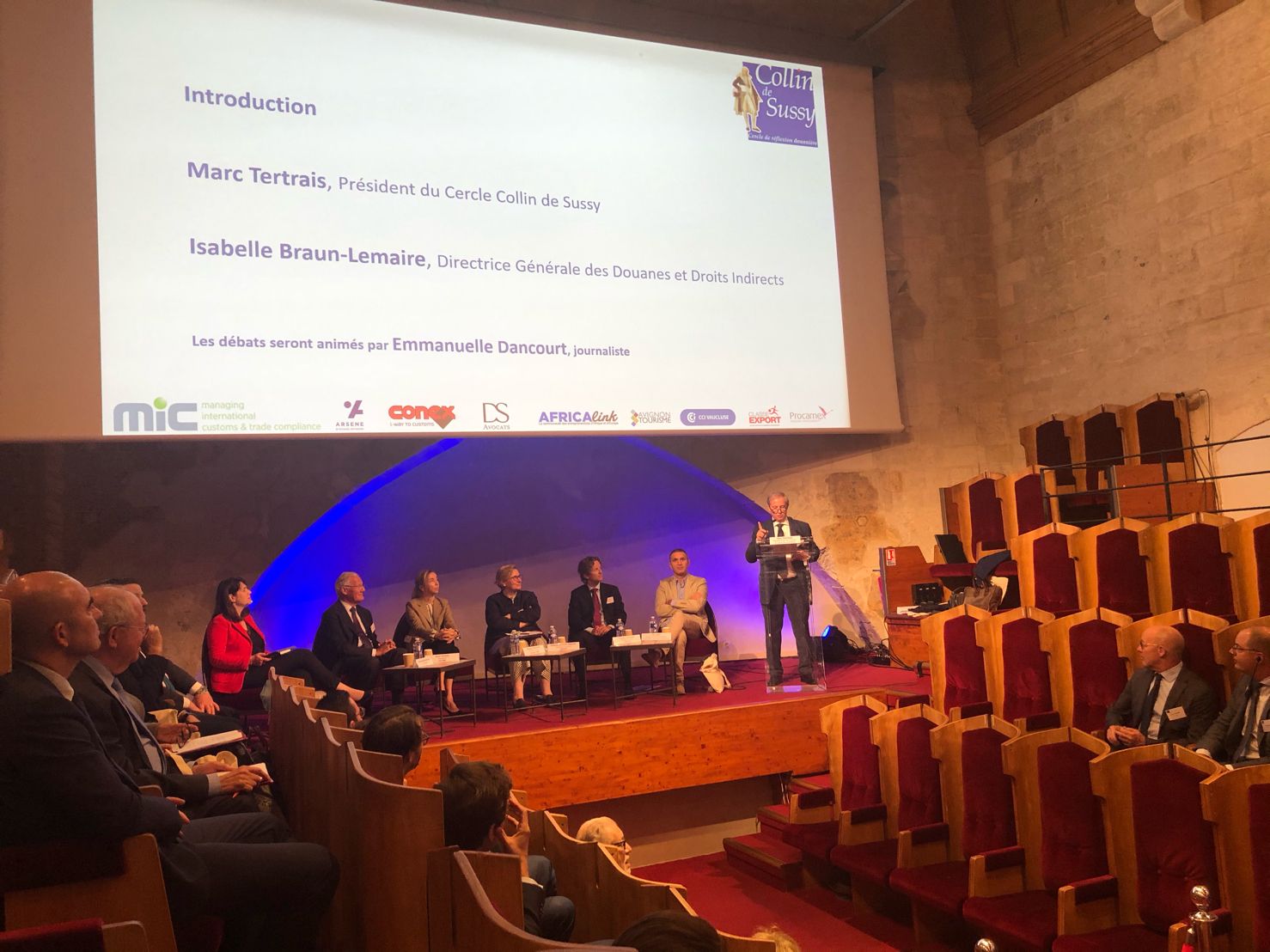
9.30 Introduction: Presentation of the context and the issues at stake
Marc TERTRAIS Chairman and founding member of Cercle Collin de Sussy,
Managing Director, MT Conseil
Guillaume VANDERHEDEN Deputy Director Directorate-General of Customs and Excise
Laurent LIVOLSI Professor of Management Sciences, University of Aix-Marseille
- Import/export flows involve not only physical goods, but also intangible goods and rights.
- There are a large number of intangible goods and rights (trademarks, designs, software, licences, industrial designs, NFT, etc.) and they have distinct characteristics (instantaneous transfer, no physical medium, difficulty of valuation).
- They represent a growing proportion of the value of goods. Digital transformation is having an increasing impact on international trade, rendering traditional processes obsolete.
- The value chain has been turned upside down.
The aim of the conference is to consider ways of modernising customs regulations and practices to meet these challenges.
10.30 ROUND TABLE 1 :
CUSTOMS VALUATION OF INTANGIBLE ASSETS IN LINE WITH THE VALUE CHAIN
Intangible assets are taken into account in a disparate and often inconsistent way, despite the fact that they play an increasingly important role in modern value chains.
Coordinator: Laurent LIVOLSI
Speakers :
- Yann AMBACH, DGDDI
- Géraldine JARLEGANT, Director of Customs and Compliance, Chanel
- MDG
- Director General INPI
Disparate treatment of intangible assets in terms of customs value
a. Intangible assets taxed as accessories to physical goods :
- Intangible rights (patents, trademarks, copyright): Certain intangible “rights” are already an adjunct to goods and are included in the taxable value of the latter (Article 71 CDU: trademarks and patents, drawings, etc.). Taxed royalties (criteria, adjustments, end-of-year regularisation, etc.)
- Intellectual services (design, plans, etc.)
b. Schizophrenic intangibles (taxed as accessories to goods or not taxed as services): software and digital technology
c. Intangible assets ignored by customs: digital assets
Towards aligning customs regulations and practices with the transformation of value chains?
Is there still a place for the moratorium on customs duties for electronic transmissions?
Systematic identification: Introduction of declaratory obligations for intangibles
Documentation of costs: Requiring contracts or invoices to attest to their real value.
Estimation based on models: Use databases or comparables to value intangible goods.
Updating digital systems to include fields dedicated to intangible assets in declarations
If intangible assets are taken into account for customs purposes, a boundary needs to be drawn, as the link between a physical asset and an intangible asset may be too tenuous, or even non-existent.
But then, shouldn’t customs law on intangibles be completely autonomous?
12.00 Discussion with the audience
12.30pm Lunch
14:00 ROUND TABLE 2 :
INTANGIBLE ASSETS AS AUTONOMOUS OBJECTS OF COMMERCE: A NEW FRONTIER FOR CUSTOMS?
Intangible assets are autonomous objects of commerce. Can customs policies and regulations be adapted, or do they need to be revolutionised by the creation of autonomous taxation?
Coordinator: Fabien Foucault
Speakers:
- Xavier SALERIE, SGDSN
- Arnaud DEVIENNE, SBDU
- Florian SIMONNEAU, DGDDI
- IGF
- OECD
- Thierry BAERT, Tax Director, Canal +
- Alexia SCOTT, Group Tax Director, L’Oréal
Are customs policies and regulations being adapted?
Towards a broader definition of “goods”, the basis of customs law, to include intangible assets?
Intangible assets that are already autonomous objects controlled by customs: BDUs
The example of “hard-to-value intangible assets” in transfer pricing tax regulations
Digital traceability: Exploiting blockchain and databases to track intangible transactions (particularly NFT).
Towards autonomous taxation?
Import duties on digital services or royalties?
Towards the creation of customs codes for intangible goods?
The need to harmonise global standards
Adopt a consumption-based tax model, such as VAT on digital services?
Involve technology companies in the creation of compliant and effective tools.
15.30 Debates with the audience
3.45pm ROUND TABLE 3: THE DIGITAL: CUSTOMS CHALLENGES AND TOOLS
Paperless customs declarations and the data hub will revolutionise practices and require data to be managed and secured.
Coordinator: Alexandre CELSE
Speakers:
- Zahouani SAADAOUI, Head of Unit B1.002 DG Taxud, European Commission (MT)
- DGDI
- Pascale AUDOUIN, Michelin Customs and Export Control Director
- Fabien VIMONT, Director of Security and Safety, DHL Express
- An expert in IT security and cybercrime
Tomorrow’s customs: paperless declarations and the Data Hub
Declaration replaced by access to data
AI at the service of customs in its roles of information, advice, control…
Inspections: specific regulations; will operators be notified? formalities? evidence? rights of defence?
Transaction” mobile application: presentation and objectives. What guarantees do operators have?
Data management and security
AI for data management and security?
The block chain for traceability :
Secure recording of customs data
Electronic signature: Replacing paper validations with reliable digital mechanisms?
How to manage and secure data exchanges between RDE, traders and customs?
Expected benefits for traders :
Reduced administrative time and costs?
Improved compliance and traceability ?
Contribution to environmental sustainability (reduced use of paper)?
5.15 pm Discussions with the audience
5.30 pm Closing speech
Jean-Paul Bouquin, Member of the Paris Bar, Founding Chairman of the Cercle Collin de Sussy
18:00 Closing of the conference